The Kid Who Isn't Yet Anthony Bourdain: How Dominic Sessa Carries Tony
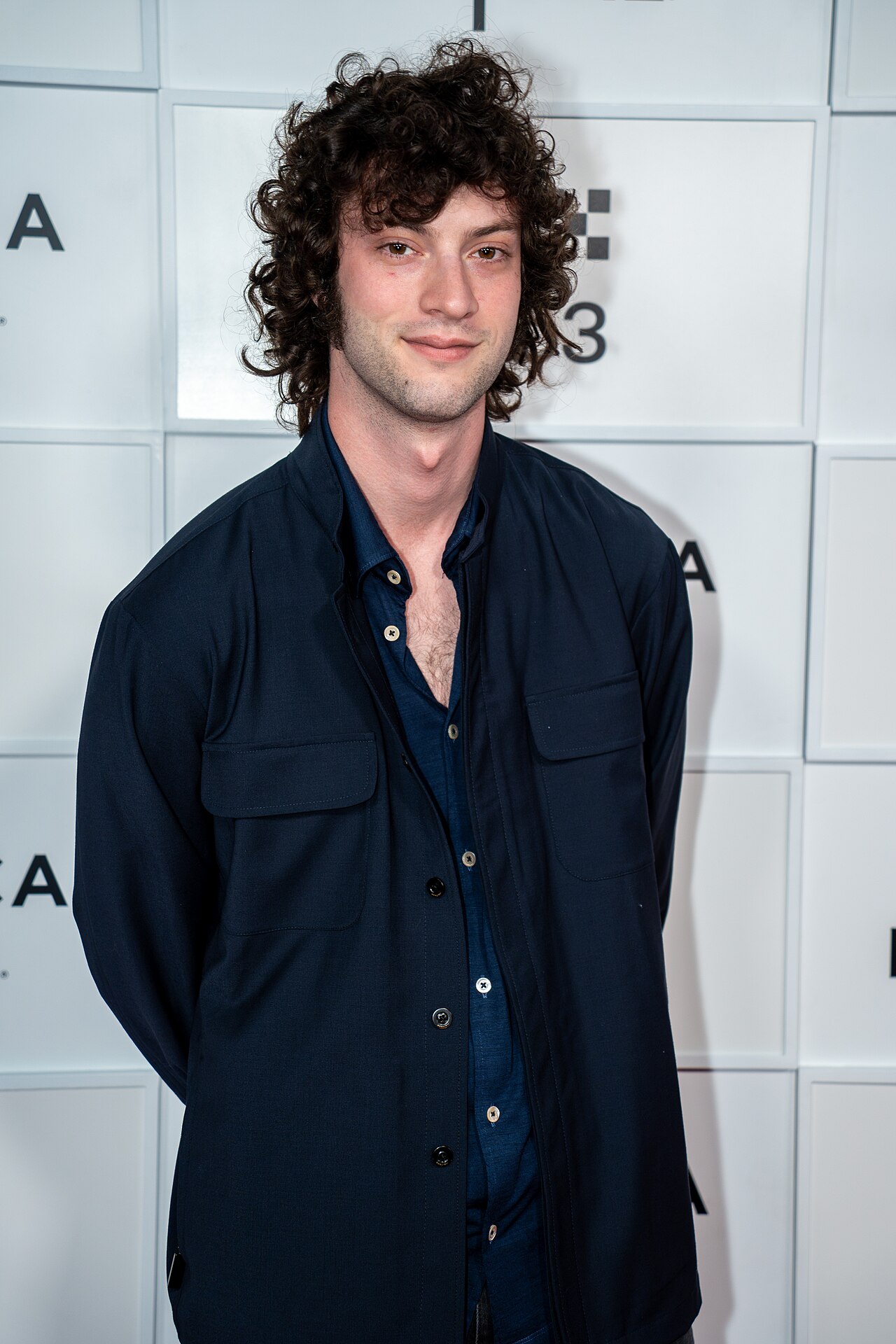
I went into Tony expecting one of two things: a reverent tribute to a beloved icon, or a greatest-hits tour of the celebrity chef's life. It is neither. The film barely touches Anthony Bourdain the chef, the author or the television star. It's about a 19-year-old who unexpectedly takes a summer job in a Provincetown restaurant. It might sound a bit disappointing; however, the performances transformed the film into a truly emotional experience, where we feel even closer to Anthony Bourdain.
Everything rests on Dominic Sessa, and he carries it with remarkable ease. Playing a famous person is hard. Playing a famous person before he is famous, when none of the qualities we associate with him have formed yet, is much harder. There's no gravelly voice to imitate and no weary charisma to lean on. What Sessa gives us is a brash, insecure, show-off kid who talks big because he's terrified of being ordinary.
What impressed me most is that he never asks for our sympathy. Tony can be grating. He performs, he exaggerates, he tries on identities to see which one fits. Yet Sessa lets small cracks of vulnerability show through the bravado, and that's what hooked me. I didn't need to know where the story ended up. I just wanted to see this restless kid figure out who he was. Sessa holds the screen so completely that the absence of the "famous" Bourdain never felt like a gap.
This is what I found most interesting about the film's approach. It isn't really about how Bourdain became a chef. It's about the choices of a young man who hasn't decided anything yet: who to be, how to impress his parents, how to impress the girl he likes, whether to keep pretending. The kitchen is the setting, but the real drama is personal. That gives the film a coming-of-age warmth that a career biopic could never have. We aren't watching a legend being assembled. We're watching a person being formed, and that's far more universal and much easier to connect with.
If Sessa is the film's engine, his relationship with Antonio Banderas's Chef is its heart. Banderas plays the restaurant owner who takes Tony under his wing, and he brings a wonderful mix of authority, warmth and amusement. He sees straight through the act. He doesn't tear Tony down, but he doesn't indulge him either, and that push and pull is where the film finds its best moments.
What makes it click is the chemistry. Banderas gives Sessa something real to react to, and Sessa in turn makes the mentorship feel earned rather than sentimental. Chef feels like the first adult who takes Tony seriously enough to challenge him, and you can sense how much that matters to a kid who has spent so long performing for people who weren't really watching. Their scenes together gave the film its emotional weight, and by the end I cared about that relationship far more than I expected to. The gentle, knowing way Chef nudges Tony toward growing up, including a small moment about his name near the end, is quietly moving.
The supporting cast deserves credit too. Emilia Jones gives Nancy a sharpness and sincerity that let her see who Tony could be, and Leo Woodall brings a magnetic, slightly dangerous energy as a kitchen colleague. The rowdy kitchen crew makes the restaurant feel alive and lived-in, which gives Tony's transformation a believable world to happen in.
Tony succeeds because it trusts its actors. It takes a story with no obvious peaks, a single summer with no big career milestones, and turns it into something charming, funny and affecting through character alone. Dominic Sessa is a revelation, Antonio Banderas is the perfect counterweight, and together they make a small film feel big. You don't need to know a thing about Anthony Bourdain to enjoy it, but you may leave with a new appreciation for the kid who became him.
The Death of Robin Hood: Taking the Hero Off His Pedestal
For centuries Robin Hood has been a symbol. He robs from the rich, gives to the poor, and laughs his way through Sherwood Forest. Michael Sarnoski's The Death of Robin Hood does something bolder than reinventing him: it strips him from the hero he was believed to be and holds him accountable for all the harm he has caused.
The film treats the myth as something built on top of a man. We meet Robin (Hugh Jackman) near the end of his life, and the film lets us see what the ballads left out. The man who became a legend was also a killer, and the title of hero came at a cost that other people paid.
For me, that is what makes the film work. It plays almost like an act of atonement, and not only on Robin's part. The film seems to atone on behalf of the storytelling tradition that polished him into a saint. Once the halo comes off, we are left with a person: tired, regretful and complicated, carrying darkness and emotions the legend never allowed him to feel. I stopped seeing a hero and started seeing a human who made many mistakes and who lived amongst violence and desperation. He is also, in a way, a victim of this heroism imposed by society, ending up a hostage of his own name, living in a never-ending cycle of violence.
The visual language carries the same idea. The colour palette is dark and muted, and the mood is heavy and melancholy, with the exaggerated tones of blue, green (directly associated to the character), and black. The violence is very explicit and gory. Just like in Robin's world, there is no limitation to what a man is truly capable of; therefore, Sarnoski did not spare the viewers from this brutality. The gore isn't there for shock alone. It works as evidence.
Jackman gives a restrained, weary performance, where Robin is simply a man being worn down by his own history and actions. Comer brings warmth and moral clarity to Brigid without turning her into a cliché, and Bill Skarsgård is memorable as Little John in the brutal opening.
This is not an easy watch. It is slow, bleak and often uncomfortable, and critics have been divided. If you go in expecting adventure, you will be disappointed. If you are willing to watch a legend be stripped down to a man, it is powerful and efficient.
Overall, The Death of Robin Hood is a dark, honest reimagining that trades the myth for the person underneath. It doesn't ask us to admire Robin Hood again. It asks us to understand, condemn, and forgive a legend who, first, was just a man.
I Swear: Being Seen Is Half the Battle
Some films entertain you, and some quietly rearrange the way you look at other people. I Swear, Kirk Jones's biopic about Scottish Tourette's campaigner John Davidson, does both. I went in knowing the basics, or what I thought were the basics: the swearing, the jokes, the clichés. I came out understanding how little I actually knew, and how much that ignorance costs the people living with the condition.
Tourette's is one of the most misunderstood conditions on screen. It is usually played for laughs or reduced to a single stereotype: the person who shouts something rude. I Swear takes that stereotype and turns it inside out. The film is set in 1980s Scotland, at a time when Tourette's was barely acknowledged, and it follows John through everything from difficulties with dating to horrific physical violence. The comedy is there, but it never comes at his expense. We laugh with him, and then the film makes us feel what it costs him.
What struck me most was the film's central idea: the real struggle isn't only the tics, it's the isolation created by other people's lack of understanding. Davidson himself has said his problems stem more from people not knowing about Tourette's than from the condition itself. Watching the film, I believed it completely. For anyone who lives with this, seeing their experience treated with honesty and dignity must mean a great deal. For everyone else, it is an education that doesn't feel like a lecture.
It also matters how the film was made. Kirk Jones has said that around 30 of the roughly 90 cast members have Tourette's, and Davidson himself is an executive producer. Some viewers will wonder why the lead role went to an actor who doesn't live with the condition, and that's a fair conversation to have. But the authenticity around him, in the ensemble and behind the camera, goes a long way toward answering it.
Robert Aramayo is extraordinary. Playing a real person is hard enough, but playing someone whose body and voice do things he can't control, without turning it into caricature, is a tightrope. Aramayo walks it. Critics have pointed to his ability to move between John's pain and confusion and a wincing humour about the whole situation. He is at once vulnerable and, through no fault of his own, potentially dangerous to the people around him, and he never lets us forget either.
The tics never feel like a party trick. They feel exhausting, unpredictable and deeply unfair. I found myself holding my breath in the quieter scenes, waiting for an outburst that I knew would come at the worst possible moment. And yet Aramayo keeps John ordinary: a guy who wants a normal life, who wants to be taken seriously, who wants someone to look past the noise. It's a performance full of heart, humour and honesty, and it's no surprise he took home the BAFTA for Best Actor. The young John, played by Scott Ellis Watson, deserves credit too, because the film rests just as much on his shoulders in the early scenes.
Furthermore, the setting isn't just scenery. The film is rooted in a specific place and class, and that shapes everything. In a working-class community in 1980s Scotland, a boy who shouts uncontrollably isn't diagnosed with compassion, he is labelled, mocked and pushed to the margins. The film shows a world with few resources and little vocabulary for difference, where the default response to something unfamiliar is suspicion, or worse. Peers treat him as insane, and family life is strained by confusion rather than cruelty, which somehow makes it sadder.
That same community gives the film its warmth and its humour. There's a dry, gallows humour running through it that feels authentically Scottish, and the supporting cast grounds it beautifully. Maxine Peake and Peter Mullan are standouts as the people who believe in John, and they give the film its emotional centre. Their kindness feels earned because it's set against such a hard backdrop.
In conclusion, I Swear follows a familiar inspirational biopic formula, and a few critics found the film around Aramayo a little conventional. But familiarity isn't a flaw when the subject deserves to reach the widest possible audience. The film is funny, moving and quietly radical in how it asks us to listen. Aramayo gives a career-defining performance, the Scottish setting gives it grit and authenticity, and the message stays with you: people don't need fixing, they need understanding. I left the cinema completely dehydrated, more empathetic, and with a smile on my face. That is what good representation on screen can do.
← BACK TO FRONT PAGE