THE BUSINESS / CO-PRODUCTION
Why look to Brazil for the next co-production?
For UK and European producers, the opportunity is a creative partner, a wider financing plan and another route to audiences. Not simply a cheaper place to shoot.
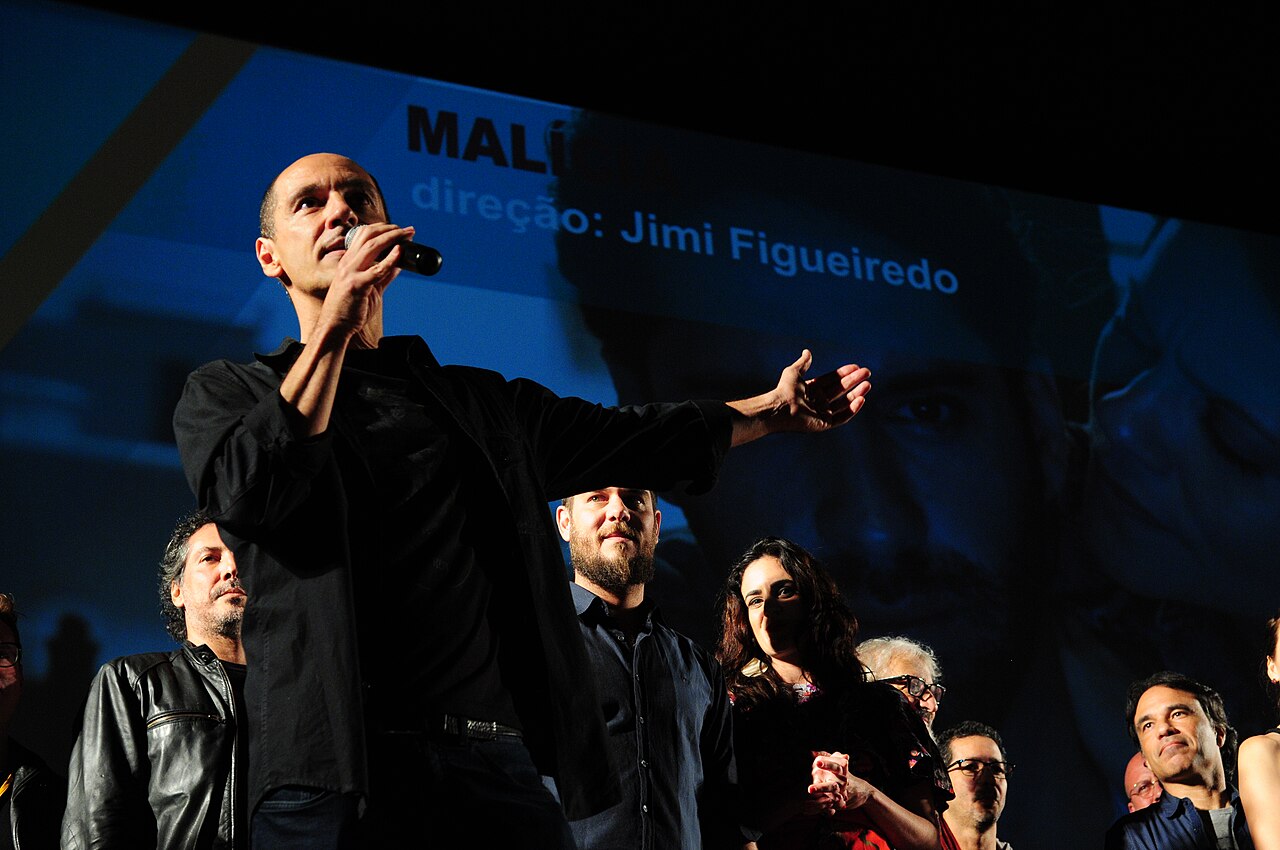
A film can cross borders long before a distributor buys it.
The Secret Agent brings together Brazil's Cinemascópio, France's mk2 Productions, Germany's One Two Films and the Netherlands' Lemming Film. Its Brazilian identity is not diluted by that production map. The map helps explain how a locally rooted story can be built with international partners.
That is the useful starting point for looking at Brazil: what can a partnership make possible that neither company could assemble alone?
Is there an audience beyond the festival room?
Brazil is a substantial market, not just a setting.
ANCINE's latest annual cinema report records 112.8 million admissions, R$2.3 billion in box-office revenue and 3,544 operating screens. Admissions are visits, not unique viewers. The same report shows attendance down 10%, with Brazilian films accounting for 9.9% of tickets. Scale creates a market worth understanding, not a captive audience for every co-production.
Recognition abroad adds another argument.
I'm Still Here won Brazil's first international-feature Oscar.
The Secret Agent took Cannes' directing and acting prizes, alongside its international production and distribution network. Those achievements show that distinctly Brazilian stories can command attention abroad. They are credentials, not a revenue forecast.
Who is already investing in the stories?
Netflix's Brazilian slate announcementsinclude five new productions and partners such as Maria Farinha Filmes, A Fábrica and Café Royal. Prime Video has also announced a larger Latin American investment programme, including Brazilian originals. Its regional budget also covers acquired content and sport: it is not a Brazil-only film fund.
The useful signal is sustained commissioning and relationships with local companies. A streamer-backed original, however, is not necessarily an official international co-production. Producers still need to distinguish a commission, a licence and a partnership with shared rights. Existing demand is a reason to investigate, not an invitation to assume a platform will finance the next proposal.
Can the production base deliver?
There is capacity behind the pitch.
Globo describes a virtual-production studio spanning more than 1,500 square metres, with over 300 square metres of LED screens.
Copa Studio's credits include animation work for My Little Pony and Johnny Test, evidence of Brazilian teams delivering within international pipelines.
These are specific capabilities, not proof that every facility is available to an independent feature. A producer still has to check crew availability, access, workflow and the actual quote. The argument is that Brazil brings production expertise, not merely scenery or inexpensive labour.
An IP goldmine?
The source material reaches beyond festival drama. Netflix's adaptation announcements span Paulo Coelho's The Pilgrimage, Raphael Montes' thriller A Estranha na Cama and Ray Tavares'
Os 12 Signos de Valentina. The same slate includes the Brazilian-developed reality format Sua Mãe Te Conhece. Books, genre fiction and formats offer different starting points for a partnership.
Calling that an IP goldmine makes sense as a creative argument, not a claim that these rights are available. A Brazilian partner can help identify material, understand its audience and approach rights-holders. Adaptation still requires a clear chain of title and a reason for the story to travel. Familiarity at home is an opening, not guaranteed demand abroad.
What does the treaty actually buy?
The UK-Brazil agreement provides a route to approved co-production status for film and television. With final approval, a work is treated as national in both countries for the relevant benefits, subject to domestic rules. That can matter for tax treatment and access to support. It is not a cheque attached to a Brazilian location.
Both authorities must approve the project. Cultural benefits, financial contributions and the work each partner brings need to fit the agreement. On the Brazilian side, ANCINE recognition has provisional and definitive stages. Initial recognition does not guarantee the finished work will qualify.
Europe is not one treaty territory. Brazil has bilateral agreements with Franceand Germany, among others. The revised Council of Europe Convention offers another framework for qualifying multilateral films. Its non-party route requires at least three co-producers in three different states that are parties, and caps combined non-party contributions at 30%. It is not a shortcut for any two-country partnership, or an automatic award of European funding.
Where could the money come from?
For eligible independent UK producers, the UK Global Screen Fund offers non-recoupable co-production grants of up to £300,000. Feature films require a minority UK partner; television support covers animation and documentary, not fiction series. Awards are competitive and depend on financing, contribution and other eligibility rules.
There is a practical UK-Brazil example: the BFI backed
Luna in Dreamland, an announced animated television co-production between Northern Ireland's Flickerpix and Brazil's Copa Studio. It demonstrates a funded partnership, not a completed audience success.
Brazilian support needs equally careful reading. An FSA call with Portugal allocated approximately R$2 million for independent features with minority Brazilian participation. That is a specific competitive programme, not a universal cash rebate. ANCINE recognition can open access to mechanisms; it does not mean a project receives every available fund.
And where does the film go?
The Blue Trail pairs Brazil's Desvia with partners including Dutch company Viking Film.
Trade reporting records sales across numerous European territories. Alongside The Secret Agent, it offers evidence of international partnerships and circulation, not proof that co-production alone caused sales or profit.
The commercial argument is therefore broader than savings. A well-chosen partner can help assemble finance, production knowledge and relationships in more than one market, while keeping the story specific. But the contract still has to settle rights, territories, creative control, currency exposure, delivery and who recoups first. A festival selection cannot settle those questions.
Brazil belongs on a producer's shortlist when the story and the partnership justify it. The strongest pitch is not "Brazil is cheaper". It is "this film becomes more achievable, and its route to an audience more credible, with this Brazilian company involved".