THE BUSINESS / EXPLAINER
Should TV go back to older cameras?
What makes television feel like a film
A television drama can be beautifully clear and still feel strangely immediate: less like entering a fictional world than watching a polished video. Faces, costumes and rooms appear fully exposed to inspection. The image records the scene, but does not always transform it.
That response raises a reasonable question for streaming productions: should some return to older cameras or film formats? The answer is sometimes, provided the choice serves the story. But camera age is only part of the discussion. Cinematographers have also softened digital images through lenses, lighting, colour and grain, without giving up a modern camera's practical advantages.
The issue is not IMAX, theatrical spectacle or a celebrated director defending celluloid. It is the television image delivered into a living room, and the decisions a production can make before that image becomes expensive to change.
The look is real; its cause is less simple
Criticism of a recognisable streaming aesthetic has been around for years. In a 2022 Vice article, Gita Jackson described The Sandman as suffering from muddy colour, conspicuous makeup and conventional framing. Her complaint was not simply that it had too many pixels. It concerned how the series' images presented an imaginative world.
The article's interview with film scholar J. D. Connor linked visual uniformity to several pressures, including technical standards, production design and where budgets are spent. That is a critical account, not proof that every Netflix production shares one look or that resolution alone causes it.
Cinematographer Armando Salas describes a related problem more precisely in IndieWire's reporting on Griselda. Modern sensors capture so much colour information, he says, that some of it can be distracting. For that Netflix series, the team deliberately simplified colour to evoke older photography. More information was available than the chosen image needed.
This distinction matters. Capturing detail and deciding how much of it to emphasise are different jobs. The grain, contrast and colour that suggest cinema to a viewer need not arise from a lower-resolution camera. They can be planned into the production's visual language.
A different generation may see a different picture
But whose idea of cinema is being missed? Perhaps some of the discomfort comes from encountering a new face of television. Viewers who learned its visual language through film texture may experience a loss when the image becomes exceptionally clean. Someone raised on ultra-HD pictures, phone video and streaming may not feel that same distance from the story.
That is an open question, not a demonstrated generational divide. Age cannot by itself explain taste, and the reporting reviewed here does not establish that younger viewers prefer cleaner images. They may seek texture too; an older viewer may welcome clarity. The useful counterpoint is that an image can feel unfamiliar without being less effective for every audience.
So to what extent is this a technical problem, and to what extent is it a change in what viewers recognise as television? A production could test both reactions rather than assuming that everyone shares the same memory of a cinematic image. The case for older formats is stronger when it concerns the particular story and its intended audience, rather than treating one generation's expectations as a universal rule.
Film changes the image and the work
Euphoria offers a television example of a deliberate return to film. American Cinematographer reports that Marcell Rév and Sam Levinson moved from the first season's predominantly digital approach toward film for the special episodes and second season. Rév drew on imperfect amateur photographs, then used Ektachrome and Vision3 stocks to build a grittier, more memory-like image.
The choice had consequences beyond adding grain. Rév describes Ektachrome as contrasty, demanding and requiring considerable light. The team adapted lighting and processing to get the intended result. Film changed how they prepared and exposed scenes, rather than acting as an instant cinematic filter.
That makes it a useful aesthetic example, but not a cost template for medium-budget television. The source does not establish that this approach would be affordable for every series. A format that produces a distinctive image still has to fit the schedule and the production's resources.
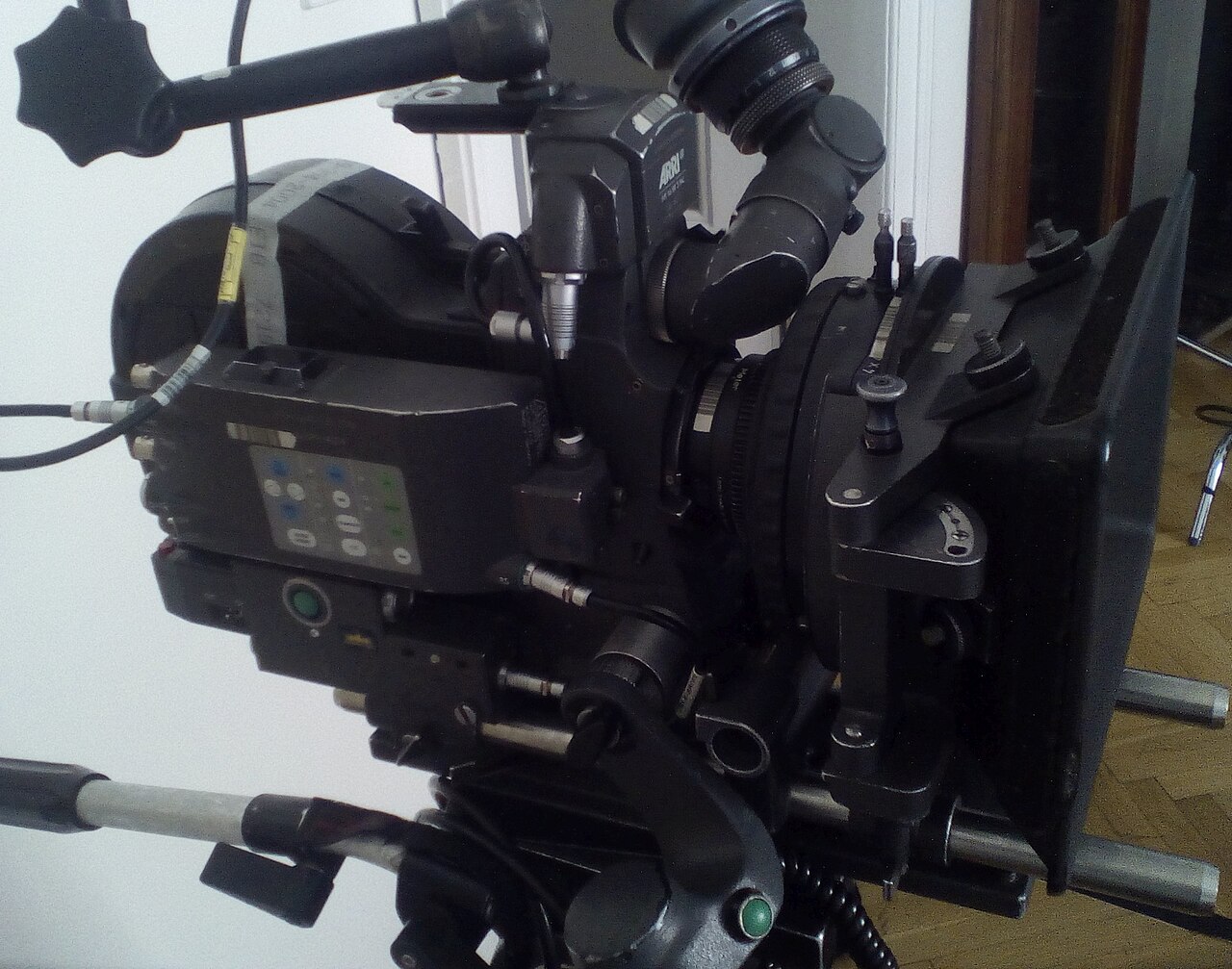
Atlanta shows the negotiation more directly. In a No Film School interview about the second season, Christian Sprenger describes using older lenses, diffusion, adjusted black levels and added film grain to soften high-resolution capture. For the episode FUBU, the team wanted 16mm but could not secure agreement on the investment. Instead, they tested an ARRI Amira in Super16 mode, then transferred the episode to film and scanned it back.
Sprenger says that process was not cheap either. The example is not a universal money-saving shortcut. It shows that filmmakers can pursue a specific texture through a mixed workflow when their first choice is impractical.
Old character does not require old equipment
Griselda provides a different answer. Salas and his collaborators built grain and colour treatments into the workflow early, so the intended texture appeared on set and in the dailies rather than arriving as a surprise in the final grade.
He also chose modern Panaspeed lenses instead of vintage ones. In IndieWire's interview, he describes wanting gentler contrast and falloff while avoiding the inconsistencies that older lenses could introduce under changing conditions. The visual target was historical; the equipment did not have to be.
On Netflix's Eric, cinematographer Benedict Spence and colourist Toby Tomkins likewise tested the look before production. In an ARRI interview, they explain using the modern ALEXA 35, a show-specific colour treatment and post-production grain and halation. Spence valued the camera's latitude and sensitivity on a tight television schedule.
The Studio offers another digital counterexample. American Cinematographer reports that Adam Newport-Berra used an ALEXA 35 for its filmic style and demanding long takes. Digital capture allowed smaller rigs than the film-magazine setup those sequences would have required. The equipment helped execute a considered visual approach rather than preventing one.
None of these examples proves that every streaming production looks distinctive. They do show why replacing the camera is not the only available response to excessive cleanliness.
Standards and the screen at home
A platform can constrain the choice. Netflix's current branded-production guidance requires 90% of a programme's final runtime to be captured on approved cameras and specifies a minimum sensor width of 3,840 pixels. It also provides guidance for limited use of non-approved cameras, with consultation and testing. Those requirements should not be confused with a rule governing every acquired title on the service.
An older camera therefore needs to fit the particular commission's requirements, or be discussed with the platform. Wanting texture does not remove delivery obligations, but meeting them does not require an untouched, clinically clean final image either.
There is also a separate issue after delivery. Samsung explains that television motion smoothing can create the soap-opera effect when applied to material intended for a different motion appearance. Filmmaker Mode disables smoothing and other processing such as sharpening and noise reduction. That familiar video-like sensation may be coming from the screen, not the production camera. Resolution and motion processing should not be treated as the same problem.
A look worth testing
For a medium-budget streaming drama, the useful starting point is a look test, not a declaration that older is better. The production could compare film, an appropriate older digital camera and a modern camera with chosen lenses and texture treatments, then assess the intended delivery versions. Colour, lighting, costumes and production design need to participate in that decision.
Older formats deserve a place in those tests when their qualities suit the story. What should return more widely is the freedom to value texture over maximum cleanliness. The camera can supply some of that character. The rest comes from deciding what the image should make the audience feel, rather than assuming the clearest record of a scene is always its best expression.
Sources Vice - The Netflix look and The Sandman ↗IndieWire - Building Griselda's period texture ↗American Cinematographer - Euphoria's move to film ↗No Film School - Christian Sprenger on Atlanta's second season ↗ARRI - Developing the look of Eric ↗American Cinematographer - Shooting The Studio ↗Netflix - Branded-production camera requirements ↗Netflix - Using non-approved cameras ↗Samsung - Motion smoothing and the soap-opera effect ↗UHD Alliance - Filmmaker Mode ↗